A Region at the Crossroads: How the American South Became the Epicenter of HIV — and the Advocates Fighting to Change That
When Americans think about the HIV epidemic, many still picture coastal cities — San Francisco in the 1980s, New York in the 1990s. The reality of where HIV most acutely concentrates in the United States today looks very different. According to the Centers for Disease Control and Prevention, Southern states account for more than half of all new HIV diagnoses nationally, despite representing roughly 38 percent of the total US population. States like Mississippi, Louisiana, Georgia, and Alabama consistently report some of the highest rates of new infections in the country. Understanding why this disparity exists — and what is being done to address it — is essential for anyone committed to equitable HIV care.
The Structural Roots of a Regional Crisis
No single factor explains the South's outsized HIV burden. Instead, a constellation of overlapping structural conditions has created an environment where transmission goes unchecked and treatment remains out of reach for far too many people.
Medicaid expansion gaps represent one of the most consequential contributors. As of 2024, a handful of Southern states — including Mississippi, Georgia (which only partially expanded), and Alabama — have either declined or significantly delayed full Medicaid expansion under the Affordable Care Act. This policy decision leaves hundreds of thousands of low-income adults in what researchers call the "coverage gap": they earn too much to qualify for traditional Medicaid but too little to afford marketplace insurance. For people living with HIV who lack consistent coverage, accessing antiretroviral therapy becomes financially untenable, interrupting the treatment continuity that is essential for achieving and maintaining an undetectable viral load.
Rural hospital closures compound the problem considerably. The South has experienced a disproportionate share of the more than 140 rural hospital closures recorded across the United States since 2010. When a rural hospital shuts its doors, it rarely disappears in isolation — it takes with it infectious disease specialists, HIV testing services, pharmacy infrastructure, and the community health workers who serve as critical bridges between patients and care. For a person living with HIV in a rural Mississippi county, the nearest HIV specialist may now be two hours away, an impossible commute for someone without reliable transportation or the ability to take unpaid time off work.
Concentrated poverty remains another foundational driver. The South is home to the majority of the nation's poorest counties, and the relationship between poverty and HIV risk is well-documented. Economic insecurity limits access to preventive care, makes adherence to medication schedules more difficult, and increases vulnerability to the social conditions — including housing instability and food insecurity — that make managing a chronic illness exponentially harder.
Cultural stigma, often amplified in more conservative communities, creates a powerful disincentive to seek testing and treatment. In communities where HIV is still spoken of in hushed tones — or not spoken of at all — individuals may delay diagnosis for years, allowing both personal health deterioration and ongoing transmission. This stigma intersects with racial dynamics in particularly acute ways: Black Americans in the South bear a dramatically disproportionate share of new diagnoses, a reality rooted in historical and ongoing systemic inequities in healthcare access and social determinants of health.
Voices from the Ground
Statistics alone cannot capture the human weight of these challenges — nor can they fully convey the extraordinary resilience of the communities responding to them.
In Jackson, Mississippi, organizations like My Brother's Keeper have spent years deploying community health workers directly into neighborhoods where distrust of the healthcare system runs deep. These workers — many of whom are themselves living with HIV — provide navigation services, help clients enroll in patient assistance programs, accompany them to appointments, and offer the kind of sustained, relationship-based support that no clinical protocol can fully replicate. Their presence has been credited with meaningfully improving linkage-to-care rates in a state that has historically struggled in this area.
In Georgia, the AID Atlanta organization operates one of the South's most comprehensive HIV service networks, offering everything from rapid testing and PrEP navigation to mental health counseling and legal advocacy. Staff members there emphasize that effective HIV care in the South cannot be siloed within the clinic — it must engage the social and economic realities that shape whether a person can realistically maintain their health.
Faith communities have also emerged as unexpected but vital partners in HIV outreach across the region. In Louisiana, a growing number of Black churches have partnered with public health departments to host testing events, train congregants as lay health advisors, and create spaces where HIV can be discussed without shame. For communities where the church remains a central institution, this integration of spiritual trust and public health messaging has proven remarkably effective at reaching individuals who would never walk into a traditional clinic.
Innovations Bridging the Care Gap
Beyond grassroots organizing, several structural innovations are showing genuine promise in expanding HIV care access across the South.
Telehealth has emerged as a particularly significant tool. The expansion of telehealth services during and after the COVID-19 pandemic opened new possibilities for patients in rural areas to consult with HIV specialists without traveling long distances. While connectivity gaps and digital literacy barriers still limit telehealth's reach in some of the region's most underserved communities, targeted investments in broadband infrastructure and device access are beginning to chip away at these obstacles.
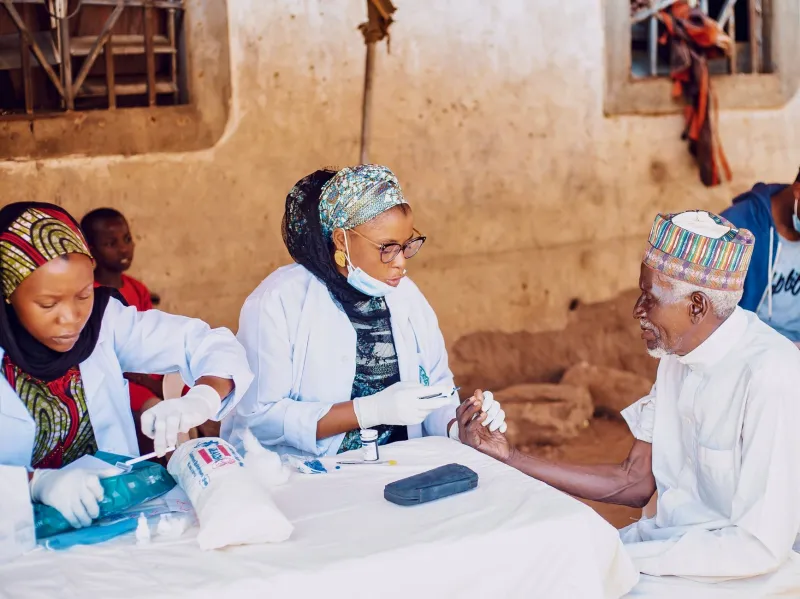
Mobile health units — vans equipped with testing supplies, rapid diagnostics, and linkage-to-care resources — are being deployed by organizations across Mississippi, Alabama, and the Carolinas to reach communities that traditional clinics cannot serve. These units often operate in partnership with local health departments and community-based organizations, creating a distributed care network that can meet people where they are.
Pharmacy-based HIV services represent another frontier. In states where pharmacists are permitted to prescribe PrEP or provide HIV testing, retail pharmacies in underserved areas have become important entry points into the care continuum. Expanding these scope-of-practice allowances and ensuring that pharmacists in Southern states receive adequate training in HIV care represents a meaningful policy opportunity.
What Needs to Happen Next
Advocates and public health experts are consistent in identifying a set of policy priorities that would most significantly reduce the South's HIV burden. Full Medicaid expansion in remaining holdout states tops virtually every list. Research consistently demonstrates that expansion states see improved HIV outcomes — higher rates of diagnosis, faster linkage to care, and better viral suppression — compared to non-expansion states.
Sustained federal investment in the Ryan White HIV/AIDS Program, which provides a critical safety net for uninsured and underinsured people living with HIV, is equally essential. The program's network of AIDS Drug Assistance Programs (ADAPs) helps ensure medication access even when insurance coverage falters, but funding must keep pace with the scale of need.
Perhaps most fundamentally, addressing the South's HIV crisis requires recognizing that clinical solutions alone are insufficient. Housing stability, food security, transportation, and economic opportunity are not peripheral to HIV care — they are its foundation. Programs that address these social determinants alongside medical treatment consistently produce better outcomes than those that treat HIV in isolation from the lives patients actually live.
A Crisis That Demands a National Response
The concentration of HIV in the American South is not an accident of geography. It is the predictable outcome of decades of underinvestment, policy decisions that prioritized ideology over public health, and systemic inequities that have never been fully reckoned with. The communities most affected by this crisis did not create the conditions that sustain it — but they are doing extraordinary work to survive and resist them.
For those of us committed to the principle that effective HIV treatment and prevention should be available to every American regardless of where they live, the South's story is not a distant concern. It is a call to action — for policymakers, healthcare systems, pharmaceutical partners, and communities alike. The knowledge and tools to end this epidemic exist. The question is whether the collective will to deploy them equitably will finally match the scale of the need.