Raising Children in the Truth: A Parent's Guide to Sharing an HIV Diagnosis With Their Kids
Raising Children in the Truth: A Parent's Guide to Sharing an HIV Diagnosis With Their Kids
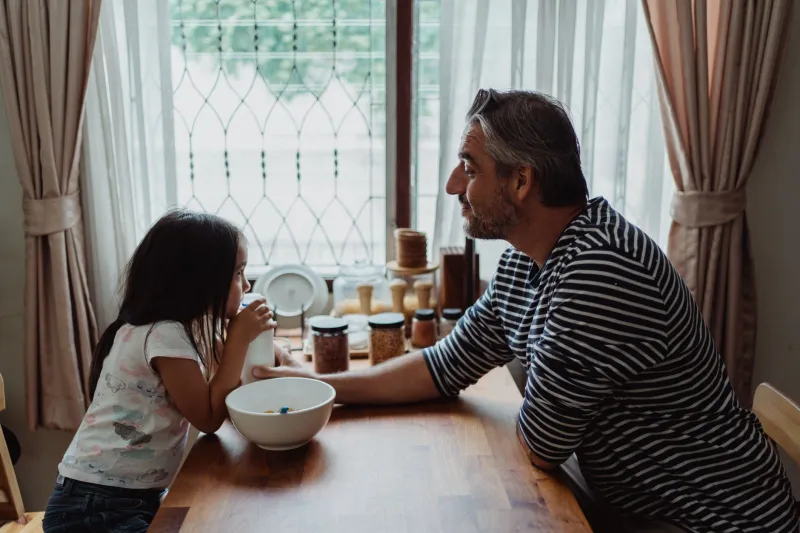
Most guidance around HIV disclosure focuses on partners, employers, or close friends. But for the estimated hundreds of thousands of Americans raising children while managing an HIV diagnosis, the most consequential conversation they may ever have is the one happening at the kitchen table — or the one they keep postponing.
There is no universal script for this. Children are not a monolith. A six-year-old processing the world through imagination and play requires an entirely different approach than a teenager navigating identity and peer pressure. What remains constant across every age group, however, is the underlying need: children need to feel safe, loved, and trusted — and parents need practical tools to make that possible.
Why So Many Parents Delay — and Why That Matters
The impulse to protect children from difficult information is not a failure of parenting. It is, in many ways, an expression of love. Parents living with HIV often cite fear of burdening their children emotionally, worry about accidental disclosure at school, and uncertainty about how much a child can truly comprehend as reasons for delaying the conversation.
However, child development specialists and HIV counselors caution that prolonged secrecy carries its own risks. Children are perceptive. They notice when a parent takes daily medication, attends frequent medical appointments, or grows quiet after a phone call. Without an explanation, many children fill in the silence with something far more frightening than the truth — imagining cancer, imminent death, or something they themselves caused.
"Children don't need to know everything at once," says a framework commonly used by pediatric HIV counselors. "But they do need to know enough to feel secure. Secrets that are too well-kept can erode trust over time."
Age-Appropriate Disclosure: A Tiered Approach
Experts widely recommend a staged, developmentally sensitive approach to disclosure — one that evolves as the child matures.
Young Children (Ages 4–7)
At this stage, children are concrete thinkers. Abstract medical concepts are largely beyond their grasp, but they understand fairness, safety, and care. Parents and counselors often recommend introducing the idea of "a germ that got into Mommy's or Daddy's blood" that doctors help manage with special medicine every day. Emphasis should be placed on reassurance: the parent is being taken care of, they are not in immediate danger, and the child did nothing wrong.
Avoid scientific terminology at this stage. The goal is not medical literacy — it is emotional safety.
School-Age Children (Ages 8–12)
Children in this range are beginning to understand cause and effect, and they are increasingly exposed to health information through school curricula and media. This is often the window during which more substantive conversations become both possible and important.
Parents can introduce the name "HIV" and explain, in plain language, how the virus affects the immune system and how antiretroviral medications keep it under control. Critically, this is also the moment to address stigma directly — to explain that HIV is not something to be ashamed of, while also helping children understand the social realities that may make discretion appropriate in certain settings.
One mother from Atlanta, who asked to remain anonymous, shared her experience: "I told my daughter when she was nine. I was terrified. But she looked at me and said, 'So your medicine keeps it quiet?' I said yes. She said, 'Okay. Can we have dinner now?' Kids surprise you."
Adolescents (Ages 13 and Older)
Teenagers are capable of understanding HIV in full medical and social context. For many parents, the teenage years represent the moment of complete disclosure — and often the most emotionally complex one. Adolescents may respond with anger, grief, or fear. They may also have questions about their own health history, especially if they were born to an HIV-positive parent.
Clinicians recommend approaching this conversation as a dialogue rather than a presentation. Give teenagers space to react, ask questions, and process over time. A single conversation is rarely sufficient. Building in follow-up discussions — casual, low-pressure check-ins — allows adolescents to revisit their feelings as they mature.
What the Research Tells Us
A growing body of evidence supports the view that age-appropriate parental disclosure, handled thoughtfully, does not harm children — and may, in fact, strengthen family cohesion. Studies published in peer-reviewed journals have found that children who are told about a parent's HIV status in a supportive context demonstrate greater trust in their parent, reduced anxiety over time, and better emotional coping skills compared to children who discover the information accidentally or much later in life.
The method of disclosure matters as much as the timing. Children who receive the news in a calm, planned setting — ideally with the support of a counselor or social worker — tend to process the information more effectively than those who overhear it or are told during a moment of crisis.
Preparing for the Conversation
Before initiating any disclosure, HIV care teams often recommend that parents take several preparatory steps:
- Consult a professional first. Pediatric psychologists, family therapists with HIV experience, and social workers at HIV care centers can help parents rehearse the conversation and anticipate difficult questions.
- Know your own story. Children often ask how a parent contracted HIV. Parents should decide in advance how much of their personal history they are ready to share, and how they will handle questions they are not yet prepared to answer.
- Establish a privacy framework. Help children understand that this is family information — not a secret, but something that does not need to be shared with everyone. Role-playing scenarios ("What would you say if a friend asked why I take medicine?") can be genuinely helpful.
- Normalize the medical reality. Framing antiretroviral therapy as a routine part of staying healthy — similar to how a diabetic parent takes insulin — can reduce the sense of crisis children might otherwise attach to the diagnosis.
When a Child Already Knows — Or Suspects
Not every parent gets to control the timeline. Some children discover a parent's diagnosis through overheard conversations, found medication, or a disclosure from another family member. In these cases, the priority shifts from preparation to repair.
If a child has learned about a parent's HIV status without proper context, experts recommend acknowledging the information directly and as soon as possible. Attempting to deny or minimize what a child already suspects can cause lasting damage to trust. Instead, parents can acknowledge the reality and use the moment to provide accurate, age-appropriate information and emotional reassurance.
Resources Available to American Families
Parents navigating this journey do not have to do so alone. Organizations such as the Elizabeth Glaser Pediatric AIDS Foundation, the Ryan White HIV/AIDS Program, and local AIDS service organizations across the country offer family counseling, peer support groups, and educational materials specifically designed for HIV-positive parents. Many Ryan White-funded clinics include social workers who specialize in family disclosure support at no cost to the patient.
The conversation between an HIV-positive parent and their child may be one of the most difficult they will ever have. But it is also, for many families, one of the most transformative — a moment that, when handled with care and honesty, can lay the foundation for a relationship built on enduring trust.
Children are more resilient than fear gives them credit for. And parents, with the right support, are more capable than they often believe.