Invisible No More: How Language, Fear, and Cultural Stigma Are Fueling a Hidden HIV Crisis in Latino Communities — and the Organizations Fighting Back
For decades, public health campaigns in the United States have focused HIV prevention efforts on the populations most visibly affected. Yet one of the fastest-growing segments of the epidemic has remained dangerously underexamined: Latino Americans, who now account for approximately 27% of all new HIV diagnoses nationally — a figure strikingly out of proportion to their roughly 19% share of the overall US population. Behind that statistic lies a web of structural, cultural, and political barriers that conspire to keep many Latino individuals from ever learning their status, let alone accessing life-changing antiretroviral therapy.
Understanding why this crisis persists — and what is being done to address it — requires looking beyond clinical data and into the lived realities of communities navigating poverty, discrimination, linguistic isolation, and the ever-present shadow of immigration enforcement.
The Numbers Tell Only Part of the Story
According to the Centers for Disease Control and Prevention, Latino gay and bisexual men bear a particularly severe burden, accounting for a significant proportion of new diagnoses among all men who have sex with men. Latino women, too, face elevated risk compared to their white counterparts. Yet diagnosis rates alone do not capture the full scope of the problem. Late-stage diagnoses — meaning individuals who discover their HIV status only after the virus has already substantially damaged their immune system — are markedly more common among Latino patients than among white patients. Late diagnosis signals a systemic failure: it means years during which someone living with HIV had no access to treatment, continued to face transmission risk, and suffered preventable health decline.
The reasons for delayed or absent testing are not mysterious. They are the predictable result of multiple, overlapping barriers that health systems have been slow to dismantle.
When Language Becomes a Wall
English-language dominance in US healthcare settings creates a formidable obstacle for Spanish-speaking patients. While federal law requires that healthcare providers receiving federal funding offer meaningful language access — including qualified interpreters — compliance is inconsistent, and the quality of interpretation services varies enormously. Many clinics rely on ad hoc solutions: family members pressed into service as interpreters, bilingual staff pulled from unrelated departments, or telephone translation services that depersonalize an already sensitive conversation.
HIV testing and counseling demand a level of nuance, trust, and emotional safety that is difficult to establish through a third-party phone interpreter. When a patient cannot fully understand what is being explained — or cannot express their fears, symptoms, and history with precision — the clinical encounter breaks down before it truly begins. For many Spanish-speaking individuals, the experience of feeling unseen and unheard in a medical setting is enough to discourage future visits entirely.
The deficit extends to written materials. HIV prevention literature, treatment guides, and insurance enrollment forms are frequently available only in English, or in Spanish translations that are grammatically awkward and culturally tone-deaf — produced by automated tools rather than community-informed writers.
The Immigration Dimension
Perhaps no barrier is more paralyzing than fear of immigration consequences. An estimated 10 to 11 million undocumented individuals live in the United States, and Latino communities account for a substantial share of that population. For an undocumented person living with HIV, the calculation around seeking care is not simply about cost or convenience — it can feel like a choice between health and safety.
This fear is not irrational. Although federal law and the Health Insurance Portability and Accountability Act (HIPAA) strictly prohibit healthcare providers from disclosing patient information to immigration authorities without explicit patient consent or a valid court order, many individuals are unaware of these protections. Misinformation spreads rapidly through communities with limited access to legal resources, and a single frightening story — whether true or exaggerated — can deter dozens of people from ever walking through a clinic door.
It is critical to state clearly: undocumented individuals have the same HIPAA privacy protections as any other patient in the United States. A doctor, nurse, or clinic administrator cannot and legally must not report a patient's immigration status to federal agencies based solely on a medical encounter. Community health educators and legal advocates emphasize this point repeatedly, because correcting this misconception is often the first step toward reconnecting a person with care.
Federally Qualified Health Centers (FQHCs) — community-based clinics that receive federal funding to serve underinsured and uninsured populations regardless of immigration status — are particularly important in this context. FQHCs operate on a sliding-fee scale and are explicitly prohibited from discriminating based on a patient's ability to pay or their documentation status. Many have robust Spanish-language services and staff drawn from the communities they serve.
Cultural Stigma: The Silence That Costs Lives
Within many Latino cultural contexts, HIV carries a weight of shame that extends beyond the individual to the entire family unit. Concepts such as familismo — the deep centrality of family loyalty and reputation — can make disclosure feel catastrophic. A diagnosis may be perceived as a reflection of moral failing, sexual deviance, or behaviors that bring dishonor. For Latino men who have sex with men, the intersection of HIV stigma and homophobia can be doubly isolating, particularly in communities where machismo norms discourage any acknowledgment of same-sex attraction.
For Latino women, stigma often operates differently but no less powerfully. A woman who tests positive may face assumptions about infidelity or drug use, threatening her relationships, her standing in her community, and sometimes her physical safety. These dynamics discourage testing and, for those who do receive a diagnosis, can make adherence to treatment — which requires ongoing medical appointments and prescription pickups — feel like a constant risk of exposure.
Community-Led Solutions That Are Actually Working
The most effective responses to these barriers have not come from distant policy offices. They have emerged from within Latino communities themselves.
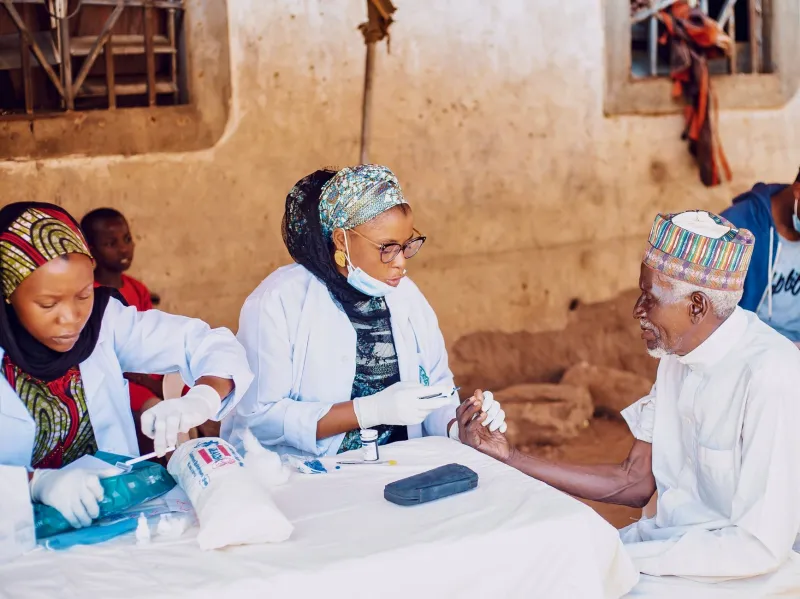
Organizations such as Latino Commission on AIDS, headquartered in New York, have spent decades building culturally grounded HIV prevention, testing, and care navigation programs that meet people where they are — linguistically, culturally, and geographically. Their approach centers on promotores de salud (community health workers), trusted members of the community who conduct outreach in homes, churches, barbershops, and social gatherings, offering HIV testing in settings that feel safe rather than clinical.
In cities with large Latino populations — Los Angeles, Houston, Miami, Chicago — community health centers affiliated with networks such as the National Association of Community Health Centers have expanded HIV services specifically designed for Spanish-speaking patients, including same-day testing, bilingual case managers, and linkage to Ryan White HIV/AIDS Program funding that covers medication costs for uninsured and underinsured individuals.
The Ryan White Program, it is worth emphasizing, does not require proof of citizenship or immigration status for eligibility. This makes it one of the most important — and underutilized — resources available to undocumented Latino individuals living with HIV.
What Individuals and Families Can Do Right Now
For Latino Americans who are concerned about HIV — whether for themselves or someone they care about — several concrete steps are available:
- Locate a Federally Qualified Health Center using the HRSA Health Center Finder tool (findahealthcenter.hrsa.gov), which allows searches by zip code and language preference.
- Request a Spanish-speaking provider or interpreter explicitly when scheduling any appointment. You have a legal right to language assistance.
- Ask about Ryan White Program enrollment at any HIV clinic or FQHC — eligibility is based on income and HIV status, not immigration status.
- Know your HIPAA rights. Your medical information is protected by federal law. A healthcare provider cannot share your information with immigration authorities based on your medical visit.
- Connect with community health workers. Organizations like the Latino Commission on AIDS, Bienestar Human Services (Los Angeles), and Caminar Latino (Atlanta) offer confidential, culturally competent navigation services.
A Path Forward Built on Trust
Closing the HIV gap in Latino communities will not happen through awareness campaigns alone. It requires healthcare systems to invest genuinely in bilingual providers, to hire staff who reflect the communities they serve, and to actively correct the misinformation that keeps individuals from seeking care. It requires policymakers to protect and expand programs like Ryan White and to ensure that immigration enforcement never becomes a tool that undermines public health.
Most fundamentally, it requires listening — to the community health workers, to the advocates, and to the individuals living with HIV who have navigated these barriers firsthand. Their knowledge is not supplementary to the clinical picture. It is essential to it.
At the Roche HIV Resource Center, we are committed to ensuring that every person living with HIV — regardless of language, background, or documentation status — has access to accurate, actionable information about their care. Because knowledge, when it is genuinely accessible, is the foundation of every life well lived with HIV.